
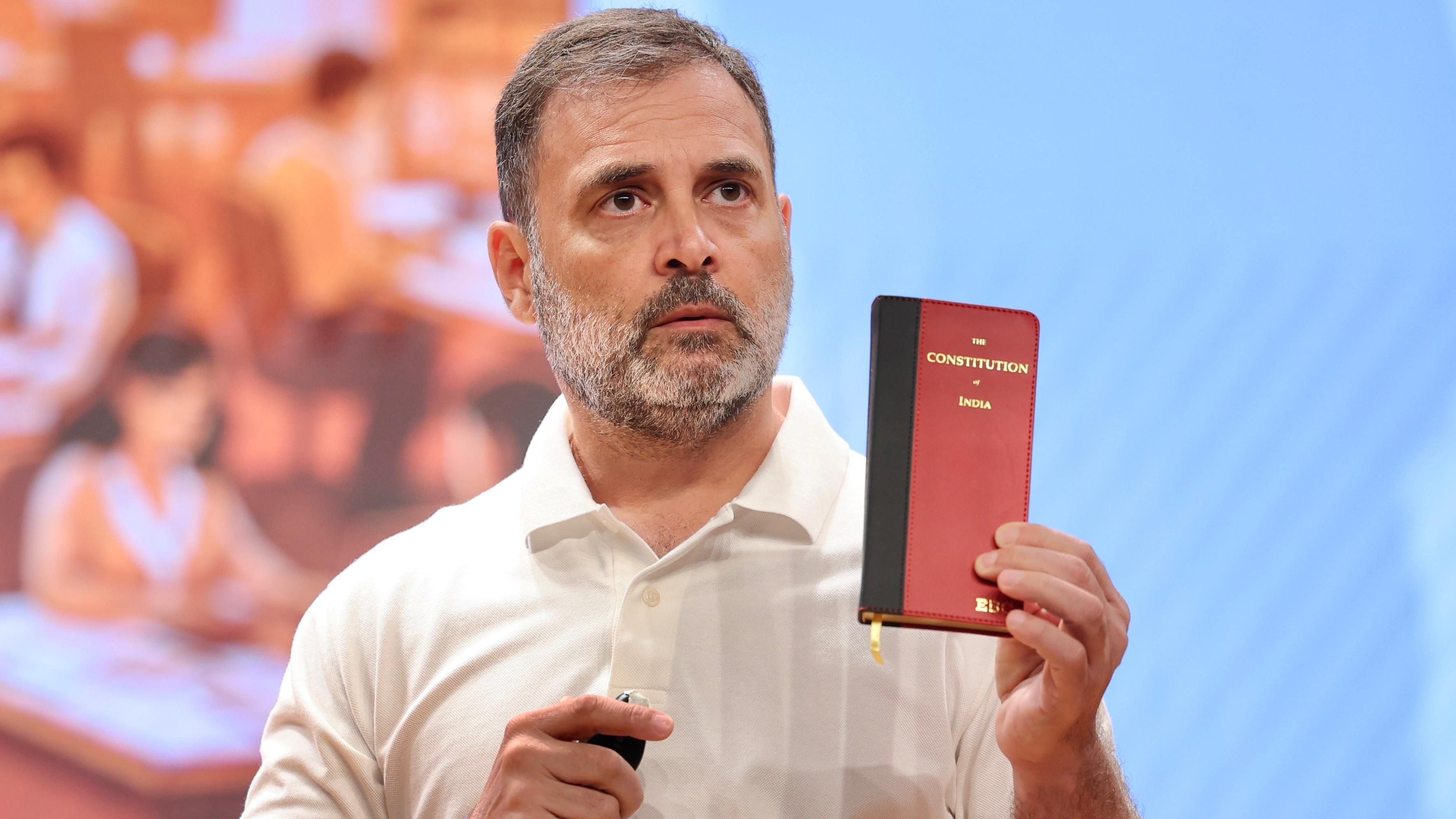
In a major political statement delivered from Berlin, India’s Leader of Opposition and Congress leader Rahul Gandhi escalated his long-standing allegation of “vote chori” (vote theft), asserting that systemic flaws in India’s electoral machinery risk undermining the democratic process. Addressing an audience at an event in Germany’s capital, he expanded on claims that key Indian institutions — including the Enforcement Directorate (ED), the Central Bureau of Investigation (CBI), and even the Election Commission of India (ECI) — have been compromised to serve partisan ends.
Gandhi’s remarks formed part of his broader international outreach, during which he has consistently raised concerns about the state of Indian democracy. His comments in Berlin marked a significant intensification of earlier allegations, positioning the issue not merely as administrative lapses but as what he described as a deliberate and organised erosion of democratic safeguards.
Expanding the Vote Chori Narrative
At the core of Rahul Gandhi’s argument is the claim that the Election Commission of India has failed to uphold its constitutional responsibility to conduct free and fair elections. He alleged that the institution, which has long been regarded as an impartial guardian of India’s democratic process, has increasingly acted in ways that favour the ruling Bharatiya Janata Party.
According to Gandhi, vote chori does not imply a single act of fraud but a combination of systemic practices that distort electoral outcomes. He argued that these practices, taken together, amount to an institutionalised process of manipulation rather than isolated errors or procedural shortcomings.
Allegations of Voter Roll Irregularities
One of Gandhi’s most prominent claims relates to irregularities in voter rolls, particularly in urban constituencies. He cited instances where electoral rolls allegedly contained a large number of duplicate entries, fake voters, or names linked to non-existent addresses. According to him, such anomalies disproportionately benefit the ruling party and undermine the principle of one person, one vote.
Gandhi specifically referred to constituencies where sudden spikes in voter registrations were recorded shortly before elections. He claimed that these additions were neither random nor accidental but reflected a deliberate effort to tilt the electoral balance. He further alleged that complaints raised by opposition parties regarding these discrepancies were ignored or inadequately addressed by election authorities.
top3casinoslots.com | newgametricks.com | topdealsguiders.com
CryptoCapInfo.com | toprealestatehome.com
Concerns Over Electoral Roll Revision Exercises
The Congress leader also criticised the Special Intensive Revision process, an exercise intended to update and cleanse voter rolls. While the official objective of the process is to remove inaccuracies and ensure eligible voters are included, Gandhi described it as a mechanism that has been misused.
He argued that instead of improving accuracy, the revision process has allegedly been employed to selectively remove genuine voters while enabling questionable additions. According to Gandhi, such selective implementation weakens electoral fairness and creates mistrust among voters, especially in closely contested seats.
Demand for Greater Transparency and Data Access
A recurring theme in Gandhi’s address was the lack of transparency in electoral data. He demanded that voter rolls be provided in machine-readable digital formats to allow independent verification and analysis. He claimed that the provision of only printed or scanned documents makes meaningful scrutiny nearly impossible and prevents opposition parties from identifying discrepancies efficiently.
Gandhi asserted that transparency is a cornerstone of democracy and that denying access to usable data fuels suspicion. He argued that if the electoral system is indeed fair, there should be no resistance to independent audits and data-driven verification.
Election Commission’s Response
The Election Commission of India has strongly rejected Rahul Gandhi’s allegations, describing them as unfounded and misleading. Election officials have reiterated that India’s electoral framework is governed by strict constitutional provisions and legal safeguards designed to prevent manipulation.
The Commission has clarified that voter roll updates follow a detailed process involving field verification, public objections, and multiple levels of oversight. It has also emphasised that no individual or political party can arbitrarily add or delete voters without following due process under election laws.
In its responses, the ECI has maintained that genuine grievances should be submitted through established legal mechanisms rather than raised through public accusations. Officials have argued that repeated claims of vote theft without substantiated proof risk eroding public trust in democratic institutions.
Political Reactions and Counter-Claims
The ruling BJP responded sharply to Gandhi’s remarks, accusing him of discrediting Indian democracy after electoral defeats. Party leaders described his statements as irresponsible and damaging, arguing that they undermine the morale of election officials who conduct polls under challenging conditions across the country.
According to the BJP, Gandhi’s allegations are part of a broader strategy to question electoral outcomes rather than introspect on political shortcomings. Government representatives have also defended investigative agencies such as the ED and CBI, stating that their actions are based on law and evidence, not political direction.
Opposition and Civil Society Perspectives
While not all opposition parties fully endorsed Gandhi’s language, several leaders echoed concerns about institutional independence and transparency. Some opposition figures argued that even if the scale of Gandhi’s allegations is contested, issues such as voter roll accuracy, data access, and accountability deserve serious examination.
Civil society groups and election observers have also highlighted the importance of regular audits, improved technology, and stronger grievance redressal mechanisms. They caution, however, that allegations must be backed by verifiable evidence to avoid weakening democratic faith.
The Broader Democratic Context
India’s electoral system is among the largest and most complex in the world, managing elections for hundreds of millions of voters across diverse regions. Maintaining accuracy and fairness in such a vast operation presents inherent challenges, including migration, urbanisation, and rapid population changes.
The controversy surrounding Rahul Gandhi’s statements highlights the delicate balance between constructive criticism and institutional trust. While scrutiny is essential for democratic health, sustained allegations without legal resolution risk polarising public opinion and diminishing confidence in electoral outcomes.
Conclusion
Rahul Gandhi’s escalation of the vote chori claim from Berlin has brought renewed attention to debates over electoral integrity, institutional independence, and democratic accountability in India. His allegations have been firmly rejected by the Election Commission and the ruling party, yet they continue to resonate within political and public discourse.
Ultimately, the episode underscores a fundamental truth of democracy: the legitimacy of elections depends not only on their conduct but also on public confidence in the institutions that oversee them. Strengthening transparency, encouraging lawful scrutiny, and fostering dialogue across political divides remain essential to preserving the credibility of India’s democratic process.
