
The ICC Men’s T20 World Cup 2026 has been surrounded by renewed controversy following a firm statement from Pakistan’s Prime Minister Shehbaz Sharif. He has confirmed that Pakistan will not play against India in the group stage of the tournament, reiterating a stance that has already drawn significant attention across the international cricketing community. The announcement has once again brought the intersection of sports, diplomacy, and governance into sharp focus.
Government’s Firm Stand
Speaking during a federal cabinet meeting in early February 2026, Prime Minister Shehbaz Sharif made it clear that Pakistan’s position on the India match remains unchanged. He stated that the decision not to play India in the group stage of the T20 World Cup was taken after careful consideration and would be upheld. According to the Prime Minister, the government sees no reason to reverse its stance at this stage of the tournament’s preparations.
The match in question was scheduled to take place in Colombo, Sri Lanka, as part of the group fixtures. However, with Pakistan opting out, the contest—traditionally one of the most anticipated encounters in world cricket—will not take place unless there is a last-minute change in policy.
Rationale Behind the Boycott
Prime Minister Sharif emphasized that Pakistan’s decision should not be viewed purely through a political lens, even though it has clear diplomatic undertones. He reiterated the long-held view that sports should ideally remain free from political influence, while also acknowledging that certain broader considerations cannot be ignored.
One of the central reasons cited for the boycott is Pakistan’s expression of solidarity with Bangladesh, which was removed from the tournament after its government did not permit the national team to travel to India due to security concerns. Pakistan’s leadership has publicly stated that it believes Bangladesh was treated unfairly and that alternative arrangements could have been explored instead of exclusion.
Additionally, Pakistan has raised concerns about what it perceives as inconsistent decision-making by global cricket administrators. Officials have pointed to past instances where India declined to tour Pakistan for major events, arguing that similar flexibility was not extended to other teams facing logistical or security challenges.
Pakistan Cricket Board’s Position
The Pakistan Cricket Board (PCB) has aligned itself with the government’s stance, maintaining that the decision is in the country’s best interest. PCB officials have supported the view that national dignity and fair treatment within international cricket structures must be upheld, even if it results in difficult sporting choices.
While acknowledging the sporting and commercial significance of an India-Pakistan match, PCB leadership has emphasized that principles and consistency cannot be compromised. The board has also indicated that it will continue to engage with tournament organizers and governing bodies, but without backing down from the current position.
BlogSent.com | BaiyGuang.com | shayaripath.com
mobisanchar.com | todayinclass.com
Impact on the T20 World Cup
The absence of an India-Pakistan clash is expected to have wide-ranging implications for the T20 World Cup. Matches between the two nations are among the most watched sporting events globally, attracting massive television audiences and commercial interest. Broadcasters, sponsors, and tournament organizers had anticipated record viewership for the group stage fixture.
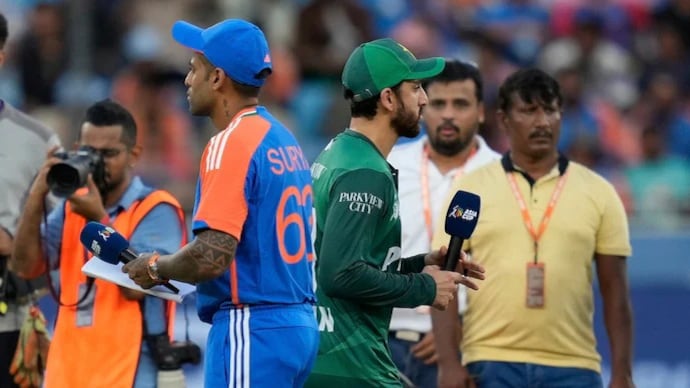
From a sporting perspective, the boycott also affects the competitive dynamics of the group. Tournament organizers will need to address how points and scheduling are managed in the absence of one of the headline matches, ensuring fairness to other teams in the group.
Reactions from the Cricketing Community
Reactions to Pakistan’s reaffirmed stance have been mixed. Cricket administrators have expressed disappointment, noting that selective participation undermines the spirit of international competition. Calls have been made for dialogue and compromise to preserve the integrity of global tournaments.
Former players and analysts have offered differing opinions. Some have argued that cricket should remain insulated from political disputes, warning that repeated boycotts could set a damaging precedent. Others have defended Pakistan’s right to take a principled stand if it believes that fairness and consistency are at stake.
Fans, meanwhile, have voiced frustration and disappointment, particularly given the rarity of India-Pakistan encounters outside major ICC events. Social media discussions reflect a broader concern that political decisions are depriving audiences of one of the sport’s most compelling rivalries.
Possibility of a Policy Reversal
Despite the firm tone of the Prime Minister’s statement, speculation continues over whether Pakistan could eventually reconsider its decision. With several weeks remaining before the scheduled match date, some observers believe that diplomatic engagement or intervention by cricket’s governing bodies could still influence the outcome.
However, as of now, the government and the PCB have both made it clear that no change should be expected. Any reversal, if it occurs, would likely require significant developments at the administrative or diplomatic level.
Looking Ahead
The T20 World Cup 2026, set to be hosted across India and Sri Lanka, will feature 20 teams competing over a month-long schedule. While the tournament promises high-quality cricket and emerging storylines, the absence of an India-Pakistan match will remain a defining talking point.
Prime Minister Shehbaz Sharif’s confirmation has effectively closed the door on immediate speculation, reinforcing Pakistan’s commitment to its current stance. As the tournament approaches, the focus will now shift to how cricket’s global institutions manage the fallout and whether future events can avoid similar controversies.
Conclusion
Pakistan’s decision not to play India in the T20 World Cup 2026 group stage represents a significant moment in international cricket. Reaffirmed at the highest level of government, the boycott underscores the ongoing challenges of balancing sport, diplomacy, and governance. While the rivalry between India and Pakistan remains one of cricket’s most powerful narratives, its absence from the upcoming World Cup serves as a reminder of how external factors continue to shape the modern sporting landscape.
