
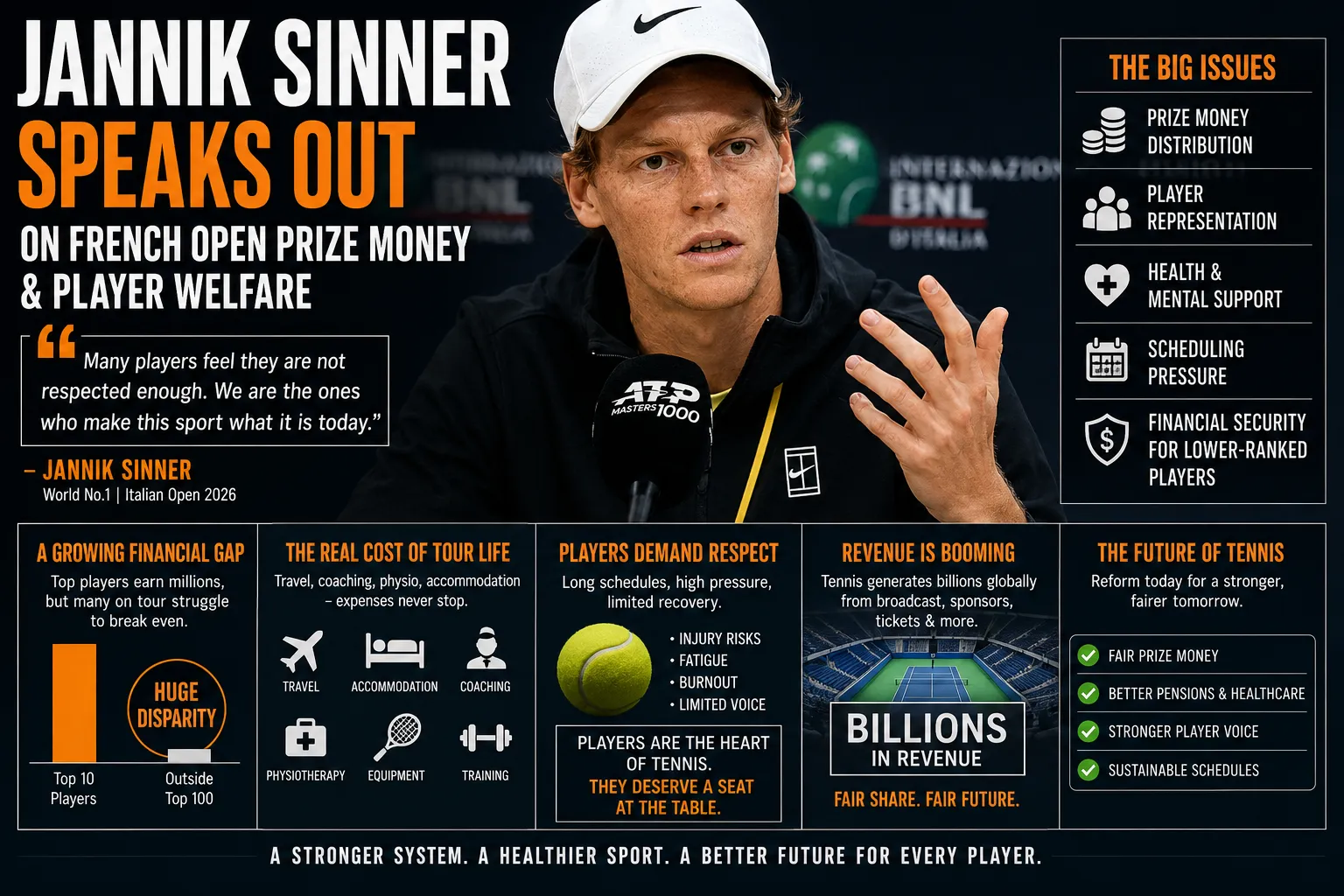
World No.1 Jannik Sinner has ignited fresh debate in the tennis world after openly criticizing the French Open prize money structure and broader player welfare issues during the Italian Open 2026. The Italian star expressed frustration over what he described as a lack of respect toward players, despite athletes playing the central role in the sport’s global popularity and financial success.
Sinner’s comments quickly gained international attention because they touched on long-standing concerns within professional tennis — including prize money distribution, player representation, pensions, scheduling pressure, and health support systems.
The debate is not entirely new, but Sinner’s status as the world’s top-ranked player has added significant weight to the discussion. Many current and former players have echoed similar concerns in recent years, arguing that while Grand Slam tournaments generate enormous revenues, players outside the very top tier often struggle financially and lack adequate long-term support.
The controversy has once again highlighted growing tensions between tennis governing bodies, tournament organizers, and players seeking a larger voice in how the sport is managed.
Why Jannik Sinner’s Comments Created Such Attention
Jannik Sinner is not just another player on the ATP Tour. As the reigning World No.1 and one of tennis’s biggest global stars, his opinions carry enormous influence.
During media interactions at the Italian Open 2026, Sinner reportedly criticised the French Open prize money structure and broader treatment of players, stating that many athletes feel they are not given proper respect despite contributing heavily to tennis’s commercial growth.
What made the comments especially powerful was that Sinner’s criticism extended beyond his personal earnings. Instead, he focused on the overall ecosystem of professional tennis and the challenges faced by players across rankings.
He also backed ongoing player concerns regarding:
-
Revenue sharing
-
Pension systems
-
Mental and physical health support
-
Player representation
-
Scheduling demands
-
Financial security for lower-ranked players
His remarks immediately sparked widespread debate among fans, analysts, and former players.
Understanding the French Open Prize Money Debate
The French Open remains one of the most prestigious and financially successful tennis tournaments in the world. Like the other Grand Slams, Roland Garros generates massive revenue through broadcasting rights, sponsorships, ticket sales, and global partnerships.
However, players have increasingly questioned whether prize money distribution fairly reflects their role in generating those revenues.
While top stars earn millions through sponsorships and tournament winnings, lower-ranked players often face significant financial challenges because of:
-
Travel expenses
-
Coaching costs
-
Physiotherapy expenses
-
Accommodation
-
Training support
-
Tournament entry costs
Many players argue that professional tennis creates a sharp financial divide between elite stars and the rest of the tour.
Sinner’s comments have renewed calls for more balanced financial support throughout the ranking system.
Why Players Feel “Disrespected”
One of the strongest parts of Sinner’s criticism was his statement that players often feel they are not respected enough within the sport’s governance structure.
This frustration reflects a wider concern among athletes who believe tournament organizers and governing bodies sometimes prioritize commercial interests over player welfare.
Players frequently point to issues such as:
-
Packed tournament calendars
-
Limited recovery time
-
Injury risks
-
Inconsistent scheduling
-
Long travel demands
-
Lack of input in major decisions
Many athletes feel that despite being the central attraction of professional tennis, they do not always have enough influence over policies that directly affect their careers and health.
Sinner’s comments resonated because they reflected concerns already shared privately by many players on tour.
The Financial Reality for Lower-Ranked Players
One of the biggest misconceptions about professional tennis is that all players earn enormous incomes.
In reality, the financial structure of the sport can be extremely difficult for players outside the top rankings.
While elite stars enjoy lucrative sponsorship deals and deep tournament runs, many lower-ranked professionals struggle to break even financially after covering operational expenses.
Costs faced by touring players often include:
-
International flights
-
Hotel stays
-
Coaching salaries
-
Fitness trainers
-
Equipment
-
Medical treatment
Without consistent tournament success, many players operate under significant financial pressure.
This is why debates about prize money distribution have become increasingly important in recent years.
Several players and experts argue that Grand Slam tournaments should allocate a larger share of revenues toward supporting lower-ranked competitors.
The Growing Demand for Better Player Representation
Sinner also voiced support for stronger player representation within tennis governance.
Professional tennis has historically operated through multiple organizations, including:
-
ATP
-
WTA
-
ITF
-
Grand Slam boards
-
Tournament organizers
This complex structure often creates disagreements regarding scheduling, revenue allocation, ranking systems, and player rights.
Some players believe they lack enough direct influence in decision-making processes.
Over the past few years, there have been increasing discussions around forming stronger player associations capable of negotiating more effectively on behalf of athletes.
Several top players have previously supported calls for reforms aimed at giving players a greater collective voice in the sport’s future.
Sinner’s remarks have now added momentum to those conversations.
Health and Mental Wellness Concerns in Tennis
Another important issue raised in the broader debate is player health support.
Modern professional tennis demands nearly year-round competition across multiple continents. Players often travel constantly while managing intense physical and mental pressure.
Common challenges include:
-
Fatigue
-
Burnout
-
Anxiety
-
Injury recovery
-
Sleep disruption
-
Emotional stress
The physical demands of long matches combined with nonstop travel schedules can significantly affect player wellbeing.
Mental health awareness has grown substantially in tennis after several high-profile athletes openly discussed psychological struggles in recent years.
Sinner’s support for better health systems reflects a growing recognition that athlete welfare must become a larger priority in modern sports management.
Why Tennis Revenue Sharing Is Becoming a Bigger Topic
One major reason behind increasing player frustration is the enormous commercial growth of global tennis.
Grand Slam tournaments generate huge financial returns through:
-
International broadcasting deals
-
Sponsorship agreements
-
Hospitality packages
-
Merchandise sales
-
Digital media rights
Players argue that because athletes are the primary reason fans watch the sport, they deserve a larger share of the revenue ecosystem.
Comparisons are often made with other professional sports leagues where players receive collectively negotiated revenue percentages.
In tennis, however, income distribution remains more fragmented because the sport lacks a centralized league structure.
This has fueled ongoing debates about fairness and long-term sustainability.
The Pressure of Being a Modern Tennis Superstar
Sinner’s comments also highlight the unique pressure faced by modern tennis stars.
Today’s top players are expected to:
-
Compete constantly
-
Maintain media obligations
-
Travel globally
-
Manage sponsorships
-
Perform consistently
-
Avoid injuries
-
Engage on social media
The commercial side of tennis has expanded dramatically over the last decade, increasing demands on players both on and off the court.
While elite athletes earn significant prize money, many believe the expectations placed on them have also intensified considerably.
Sinner’s willingness to publicly address these concerns reflects growing confidence among younger players to speak openly about structural issues within the sport.
How Fans and Former Players Reacted
The reaction to Sinner’s comments has been mixed but highly engaged.
Many fans and former players supported his stance, arguing that athletes deserve more respect and stronger financial protections given the physical sacrifices required in professional tennis.
Others argued that top players already earn substantial incomes and questioned whether prize money complaints are justified.
However, even critics acknowledged that lower-ranked players face genuine financial challenges that deserve attention.
Several former professionals have also noted that the current tennis system can be particularly difficult for players trying to establish long-term careers outside the elite rankings.
The debate has therefore expanded beyond Sinner himself into a broader conversation about the future structure of professional tennis.
What This Means for the Future of Tennis
Sinner’s comments may ultimately become part of a larger movement pushing for structural reform in tennis.
As younger stars become more influential, players are increasingly willing to challenge traditional governance systems and demand better conditions.
Possible future reforms could include:
-
Improved prize money distribution
-
Expanded pension programs
-
Better healthcare support
-
More player input in scheduling
-
Enhanced mental health resources
-
Greater transparency in revenue allocation
Whether governing bodies respond aggressively or cautiously remains to be seen.
However, one thing is becoming increasingly clear: players are no longer afraid to publicly question how the business of tennis operates.
Final Thoughts
Jannik Sinner’s criticism of the French Open prize money structure and broader player welfare system has sparked one of the most significant conversations in tennis during the 2026 season.
His comments touched on issues extending far beyond individual earnings — including respect, representation, financial fairness, health support, and the long-term sustainability of professional tennis careers.
As one of the sport’s biggest stars, Sinner’s voice carries major influence. His willingness to publicly address these concerns may encourage deeper discussions about how tennis evolves in the future.
The debate ultimately reflects a changing reality in modern sports: athletes are no longer viewed only as performers on the court. They are also increasingly becoming active voices in shaping the systems, policies, and financial structures that define their professional lives.
releaseprcore.com releaseprcore.com releaseprcore.com releaseprcore.com releaseprcore.com releaseprcore.com releaseprcore.com releaseprcore.com releaseprcore.com releaseprcore.com releaseprcore.com releaseprcore.com releaseprcore.com releaseprcore.com releaseprcore.com releaseprcore.com releaseprcore.com releaseprcore.com releaseprcore.com releaseprcore.com releaseprcore.com releaseprcore.com releaseprcore.com releaseprcore.com releaseprcore.com releaseprcore.com releaseprcore.com releaseprcore.com releaseprcore.com releaseprcore.com releaseprcore.com releaseprcore.com releaseprcore.com releaseprcore.com releaseprcore.com releaseprcore.com releaseprcore.com releaseprcore.com releaseprcore.com releaseprcore.com releaseprcore.com releaseprcore.com releaseprcore.com releaseprcore.com releaseprcore.com releaseprcore.com releaseprcore.com releaseprcore.com releaseprcore.com releaseprcore.com releaseprcore.com releaseprcore.com releaseprcore.com releaseprcore.com releaseprcore.com releaseprcore.com releaseprcore.com releaseprcore.com releaseprcore.com releaseprcore.com releaseprcore.com releaseprcore.com releaseprcore.com releaseprcore.com releaseprcore.com releaseprcore.com releaseprcore.com releaseprcore.com releaseprcore.com releaseprcore.com releaseprcore.com releaseprcore.com releaseprcore.com releaseprcore.com releaseprcore.com releaseprcore.com releaseprcore.com releaseprcore.com releaseprcore.com releaseprcore.com releaseprcore.com releaseprcore.com releaseprcore.com releaseprcore.com releaseprcore.com releaseprcore.com releaseprcore.com releaseprcore.com releaseprcore.com releaseprcore.com releaseprcore.com releaseprcore.com releaseprcore.com releaseprcore.com releaseprcore.com releaseprcore.com releaseprcore.com releaseprcore.com releaseprcore.com releaseprcore.com releaseprcore.com releaseprcore.com releaseprcore.com releaseprcore.com releaseprcore.com releaseprcore.com releaseprcore.com releaseprcore.com releaseprcore.com releaseprcore.com releaseprcore.com releaseprcore.com releaseprcore.com releaseprcore.com releaseprcore.com releaseprcore.com releaseprcore.com releaseprcore.com releaseprcore.com releaseprcore.com releaseprcore.com releaseprcore.com releaseprcore.com releaseprcore.com releaseprcore.com releaseprcore.com releaseprcore.com releaseprcore.com releaseprcore.com releaseprcore.com releaseprcore.com releaseprcore.com releaseprcore.com releaseprcore.com releaseprcore.com releaseprcore.com releaseprcore.com releaseprcore.com releaseprcore.com releaseprcore.com releaseprcore.com releaseprcore.com releaseprcore.com releaseprcore.com releaseprcore.com releaseprcore.com releaseprcore.com releaseprcore.com releaseprcore.com releaseprcore.com releaseprcore.com releaseprcore.com releaseprcore.com releaseprcore.com releaseprcore.com releaseprcore.com releaseprcore.com releaseprcore.com releaseprcore.com releaseprcore.com releaseprcore.com releaseprcore.com releaseprcore.com releaseprcore.com releaseprcore.com releaseprcore.com releaseprcore.com
