
Tragedy in Janakpuri: 25-Year-Old Biker Dies After Falling Into Open Pit
A tragic incident in West Delhi’s Janakpuri area has once again raised serious concerns about civic safety and infrastructure oversight in the national capital. A 25-year-old motorcyclist, identified as Kamal, lost his life after falling into an open pit late at night while returning home from work. The incident has triggered widespread outrage, renewed scrutiny of safety measures at construction sites, and urgent calls for accountability from civic authorities.
The Incident and Timeline
Kamal, a resident of Kailashpuri, worked at a call centre for a private bank in Rohini. On the night of the incident, he left work late and was riding his motorcycle back home. According to family members, he was last seen travelling through the Janakpuri District Centre area. When he failed to reach home by midnight and stopped responding to calls, his family grew anxious.
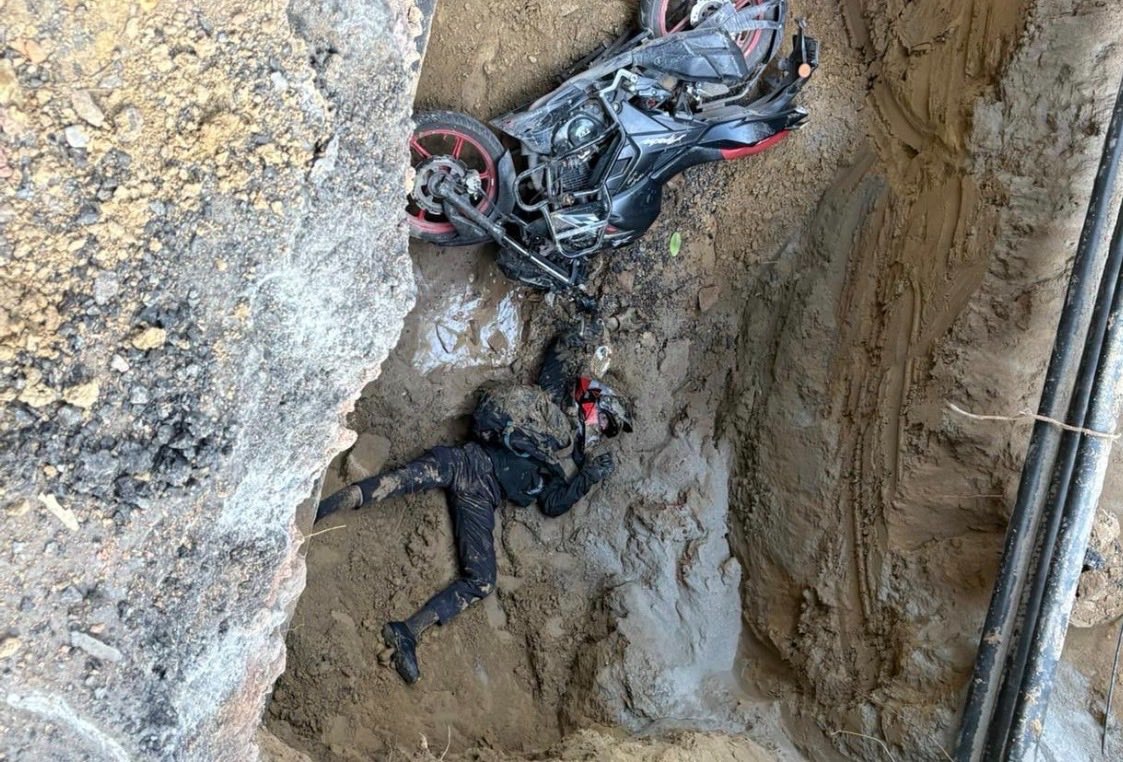
Concerned relatives and friends immediately began searching for him. They visited multiple police stations across West Delhi and nearby areas through the night but reportedly did not receive immediate assistance. It was only the following morning that authorities informed the family that Kamal’s body had been discovered inside a deep pit along with his motorcycle.
The Open Pit and Safety Lapses
Initial investigations revealed that the pit was part of an ongoing civic project, reportedly linked to underground work being carried out by a government agency. The excavation was located on a public road used regularly by commuters. According to preliminary findings, the pit was either poorly barricaded or inadequately marked, making it difficult for motorists to detect, especially during late-night hours.
While officials have claimed that basic safety arrangements such as barricades and protective mesh were in place, eyewitness accounts and statements from the victim’s family strongly dispute this. They allege that there were no proper warning signs, reflective indicators, or adequate lighting around the excavation site. The low visibility conditions at night may have further reduced Kamal’s ability to spot the hazard in time.
The fact that Kamal was found wearing a helmet and protective gear suggests that he was riding responsibly and that the fall occurred suddenly, leaving him little chance to react or avoid the pit.
Family’s Ordeal and Police Response
The family’s anguish was compounded by the hours-long search through the night. According to relatives, they approached several police stations seeking help but were told that a formal complaint could only be registered the next morning. This delay has raised serious questions about emergency response protocols and whether quicker intervention could have changed the outcome.
By the time Kamal’s body was recovered the next day, hope had turned into heartbreak. The family has since expressed deep frustration over what they describe as a lack of urgency and coordination among authorities during those critical hours.
ThemeCosine.com| SeizureCanine.com | Juction.com
OldJHCC.com| ProfessionalSearch.net
Allegations of Negligence
Kamal’s death has sparked strong allegations of civic negligence. His family has accused authorities responsible for the excavation of failing to ensure public safety. They argue that open pits on public roads pose a severe risk, particularly to two-wheeler riders, and that proper safeguards could have prevented the accident.
Some family members have also questioned whether all aspects of the incident have been fully examined, urging investigators to explore every possible angle. Police officials, however, have stated that the case is being investigated thoroughly and that no conclusions will be drawn until all evidence is reviewed.
Official Action and Investigation
Following public outrage and media attention, senior officials ordered a detailed inquiry into the incident. A probe has been initiated to determine whether safety norms were followed at the construction site and to establish responsibility for any lapses. Officials have stated that strict action will be taken if negligence is confirmed.
Authorities have also inspected the site to assess the adequacy of barricading, signage, and lighting. The investigation is expected to examine whether the excavation complied with prescribed safety standards and whether existing guidelines were ignored or poorly implemented.
Broader Civic Safety Concerns
This incident has once again highlighted a recurring problem in urban centres like Delhi—unsafe construction zones and poorly managed roadworks. Open pits, uncovered manholes, and inadequate barricading have been responsible for several accidents in the past, often involving pedestrians and two-wheeler riders who are particularly vulnerable.
Despite repeated assurances from civic agencies, enforcement of safety norms remains inconsistent. Experts and road safety advocates argue that construction projects on public roads must adhere to strict safety protocols, including visible warning signs, reflective barricades, sufficient lighting, and regular monitoring.
Impact on the Community
Beyond the administrative response, the human cost of the tragedy is profound. Kamal was a young working professional with aspirations and responsibilities, whose life ended abruptly while commuting home—a routine activity for millions of city residents. His death has left his family devastated and has deeply affected his friends and neighbours.
Local residents have expressed fear and anger, pointing out that many such hazards exist across the city and that commuters often navigate roads filled with risks due to ongoing construction.
A Call for Accountability and Reform
The Janakpuri tragedy has intensified demands for stronger accountability mechanisms. Citizens and civic groups are urging authorities to ensure that no excavation work is carried out without strict safety compliance. There is also growing emphasis on improving emergency response systems, ensuring quicker police action in missing person cases, and enhancing coordination among departments.
Many believe that preventing such tragedies requires not just investigations after incidents occur, but proactive measures—regular audits of construction sites, strict penalties for violations, and public reporting mechanisms to flag unsafe locations.
Conclusion
The death of 25-year-old Kamal after falling into an open pit in Janakpuri is a stark reminder of the dangers posed by civic negligence and inadequate safety enforcement. As investigations continue, the incident stands as a painful example of how ordinary journeys can turn fatal when infrastructure safety is compromised.
For Kamal’s family, no inquiry or action can undo their loss. However, there is hope that this tragedy will lead to meaningful reforms, stricter oversight, and a renewed commitment to public safety—ensuring that no other family has to endure a similar loss in the future.
